 Русский
 Հայերեն
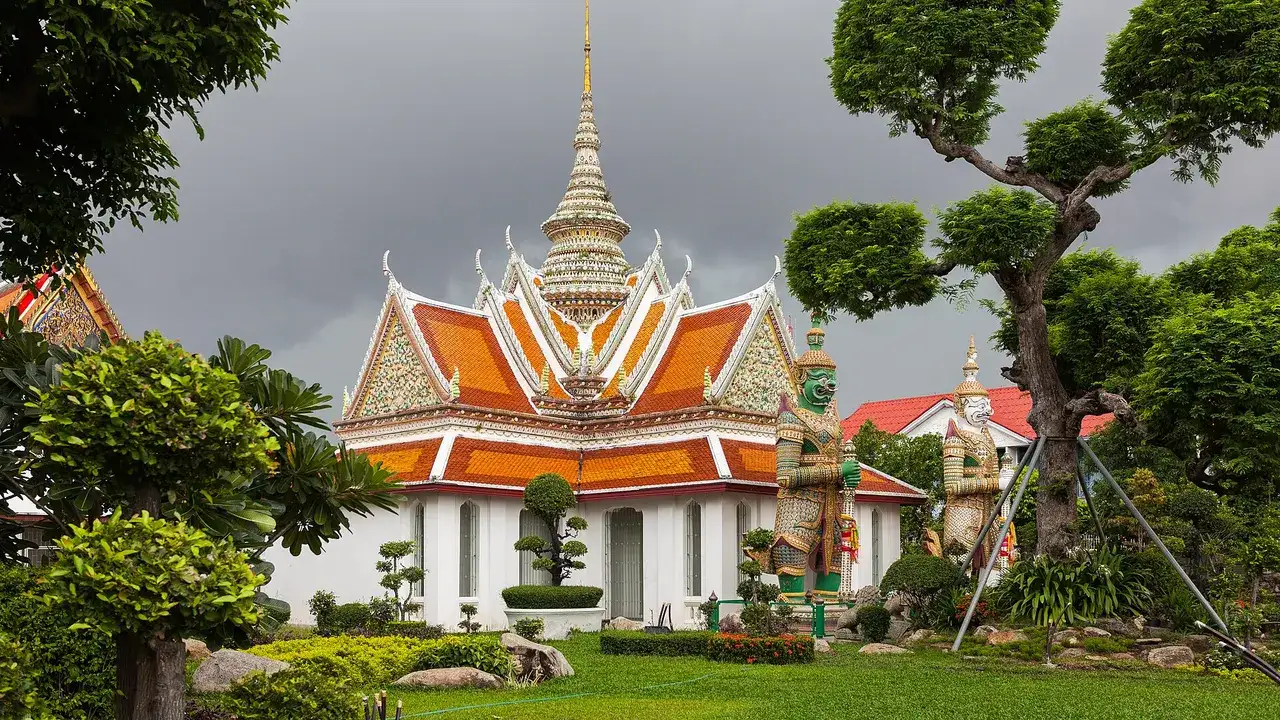
If this is your first time in Thailand and you are wondering what to see in Bangkok in 3 days, don't try to cover the whole city. Bangkok is huge, hot, loud, and full of contrasts: in the morning you stand barefoot by a golden stupa, at midday you hide in an air-conditioned mall, and in the evening you eat noodles on Yaowarat under neon signs.
Below is an itinerary that isn't a race but still keeps a busy schedule: the main temples, the markets, the Siam area, Lumpini Park, and a choice for day three, a floating market or Ayutthaya. Times and prices are a rough guide; before your trip, it's best to double-check them on the official websites of the sights, transport, and airports.
Before you start: where to stay and how to plan your days
For a first visit, it's most convenient to stay near the BTS or MRT. Good areas for a short stay: Siam, Silom, Asok, Chit Lom, and the area around National Stadium station. If you want Bangkok's street life in the evening, look at hotels closer to Chinatown, but there are fewer convenient metro stations there.
The best logic goes like this: put temples in the morning, malls and the park in the midday heat and closer to sunset, and markets in the evening or on weekends. It's better to arrive at temples early: fewer people, softer light, and the humidity is easier to handle.
Bring a light long-sleeved shirt, a scarf, or thin trousers. In temples, your shoulders and knees must be covered. You often take your shoes off before entering sacred halls, so sandals or sneakers without complicated laces are the easiest choice.
Before you fly, check the entry rules: visa-free stay periods and document requirements can change. We have a separate guide on this: entering Thailand for Russian citizens.
Day 1: the Grand Palace, Wat Pho, Wat Arun, and Yaowarat in the evening
Start with the historic center. This is the most packed day, so don't plan anything for the evening that requires you to be fresh and dressed up.
08:30: the Grand Palace and the Temple of the Emerald Buddha. Arrive at opening time: tour groups quickly gather at the ticket desks. Allow 1.5–2 hours for the visit. The grounds are large, with lots of sun and little shade. The entrance ticket for foreigners is roughly 500 baht. They usually don't ask for your passport, but it's good to have a copy of your ID on your phone.
10:45: Wat Pho. From the Grand Palace, you can walk to Wat Pho in 10–15 minutes. This is home to the famous Reclining Buddha, and the grounds are calmer than the palace. A ticket is roughly 300 baht. If you like massage, Wat Pho is known for its school of traditional Thai massage, but it's better to check treatment times and prices on site.
12:30: lunch by the river. Around Tha Tien Pier, there are cafés and simple local places. Don't chase a view at any cost: sometimes the little noodle shop next door is tastier than the panoramic restaurant. In the heat, order water right away. The ice in tourist spots is usually factory-made, but if your stomach is sensitive, it's better to be careful.
14:00: Wat Arun across the river. A ferry runs from Tha Tien pier to the opposite bank. Wat Arun is beautiful during the day, but it's especially good closer to sunset, when the porcelain on its towers catches the warm light. The steps can be steep.
17:30: rest at the hotel or a coffee break. After the temples, you'll want a shower and air conditioning. Don't try to be a hero: it's better to spend the evening in Chinatown with some energy left.
19:00: Yaowarat, Chinatown. Head to Wat Mangkon MRT station or take a taxi to Yaowarat Road. It's better not to book a restaurant in advance here; instead, walk down the street and see where locals are lining up. Try oyster omelette, duck, noodle soup, a mango dessert, and pomegranate juice. Cash comes in handy: small stalls often don't take cards.
Day 2: Chatuchak, Siam, and Lumpini Park
Day two depends on the day of the week. If you are in Bangkok on a weekend, put Chatuchak Market in the morning. If not, start with Siam, museums, or cafés, and swap the market for Or Tor Kor Market near Kamphaeng Phet.
09:30: Chatuchak Market. Chatuchak Weekend Market is a gigantic market near BTS Mo Chit and MRT Chatuchak Park/Kamphaeng Phet stations. Most trading happens on weekends. You'll find clothes, ceramics, spices, souvenirs, vintage, plants, and homeware. The trick is simple: take a photo of the section number and the nearest landmark, otherwise finding your way back to a stall you liked is almost impossible.
At Chatuchak, bargaining is fine if you are buying several items. But bargain calmly, with a smile and without theatrics. People hardly ever haggle over drinks and food. If you have questions about tipping in Thailand, check out our separate guide: how much to tip abroad.
13:00: lunch and moving to Siam. The BTS from Mo Chit to Siam is easy and fast. The Siam area is a cluster of Siam Paragon, Siam Center, Siam Discovery, MBK Center, and CentralWorld nearby. In the heat, it's not just shopping but also a way to wait out the toughest part of the day.
14:00–17:00: the Siam malls. Siam Paragon has brands, a food court, and the Sea Life Bangkok Ocean World aquarium. MBK is more like an indoor market: accessories, clothes, small electronics, souvenirs. Food courts often give you a card or take payment at the cashier, and refund the balance after you eat.
17:30: Lumpini Park. Get to MRT Si Lom or BTS Sala Daeng. The park is pleasant for a walk toward evening, when locals jog, do aerobics, and relax by the water. The monitor lizards look impressive, but it's better not to get close or feed them. After your walk, you can have dinner in the Silom area or head back to Siam.
If you've already done itineraries like Dubai in 3 days, Bangkok feels less sterile and more chaotic. Here it's worth leaving extra time for traffic jams, lines, the heat, and the sudden urge to just sit with a cold Thai iced tea.
Day 3: a floating market or Ayutthaya
Day three is best spent outside central Bangkok. The choice depends on what appeals to you more: a photogenic market on the water or the ancient temples of the former capital.
Option A: a floating market
The best-known option is Damnoen Saduak Floating Market. It's touristy, colorful, and often overcrowded, but easy to understand for a first time. Departures are usually early: 06:30–07:00 from central Bangkok. The drive takes roughly 1.5–2 hours each way, and the boat is paid separately or included in the tour.
If you want a less crowded atmosphere, look at Amphawa Floating Market, but it suits an evening format better and is often busiest on weekends. If you are going on your own, an organized transfer or a car with a driver is more convenient: public transport is possible, but it will eat up a lot of time and energy.
The plan for the day: an early start, the market, a short lunch, and back in Bangkok by 14:00–16:00. In the evening, you can get a massage, stroll along the ICONSIAM riverfront, or go back to Yaowarat for whatever you didn't get to try.
Option B: Ayutthaya
Ayutthaya suits people who love history and ruins. It's the former capital of Siam, where the temples of Wat Mahathat, Wat Phra Si Sanphet, and Wat Chaiwatthanaram have survived. The most recognizable shot is the Buddha head in the tree roots at Wat Mahathat.
You can get there by train from Krung Thep Aphiwat station or Don Mueang station, by minivan, by bus, or on a tour. The trip takes about 1–2 hours each way, depending on the transport and traffic. Once there, it's convenient to hire a tuk-tuk for a few hours, or a bicycle if the heat is bearable.
For a day on your own, plan it like this: leave Bangkok at 08:00, see 3–4 temples, have lunch, and get back at 17:00–19:00. Don't try to see everything: under the blazing sun, the ruins quickly turn into a marathon.
Transport, money, heat, and a rough budget
In Bangkok, it's easy to combine the BTS Skytrain, MRT, river boats, Grab, and regular taxis. The BTS and MRT are good for Siam, Silom, Asok, and Chatuchak. The metro doesn't reach everywhere in the historic center, so people often get to the temples via MRT Sanam Chai or by river.
The Chao Phraya river express is useful for getting to the Grand Palace, Wat Pho, Wat Arun, and ICONSIAM; check the lines, piers, and fares of the Chao Phraya Express Boat. Look at the color of the boat's flag and its direction; staff at the piers usually help out.
Grab is handy in the evening, from your hotel, and after the markets. At rush hour, a car can be slower than the metro. A tuk-tuk is more of an attraction than everyday transport: agree on the price before you get in, bargaining is fine, and it's better to skip suspiciously cheap offers that include stops at shops.
From Suvarnabhumi Airport (BKK), the Airport Rail Link runs into the city to Makkasan and Phaya Thai. From Don Mueang (DMK), the popular options are the A1/A2 buses to the Mo Chit and Chatuchak Park area, taxis, and transfers.
For maps, Grab, a translator, and staying in touch with your guide, it's convenient to set up a travel eSIM for Thailand in advance on the Thailand page, especially if you land late and don't want to hunt for a mobile carrier desk at the airport.
When it comes to money, it's better not to rely on a card alone. The currency is the Thai baht. You need cash at markets, in small cafés, for boats, tuk-tuks, and tips. Bank cards are accepted at hotels, malls, and chain places. PromptPay QR payments are common among locals, but tourist cards and apps don't always work with them.
| Daily expense | Rough guide per person | Comment |
|---|---|---|
| BTS/MRT and boats | 150–300 baht | If you don't take taxis a lot |
| Grab/taxi around the city | 150–500 baht per ride | Depends heavily on traffic and area |
| Food at simple places | 250–600 baht | Street food and food courts |
| Cafés and restaurants | 600–1500 baht | Without pricey bars and alcohol |
| Temple entrance tickets | 300–1000 baht | Depends on which places you choose |
| Trip to Ayutthaya or a market | 800–2500 baht | Cheaper on your own, easier with a tour |
The heat in Bangkok is no joke. Drink water before you feel thirsty, wear a hat, and don't put open-air sights in the middle of the day. In the rainy season, a downpour can start suddenly, so a light rain poncho is sometimes more useful than an umbrella.
Frequently asked questions
Can I see Bangkok in 3 days without tours?
Yes, if you are comfortable with maps and city transport. The Grand Palace, Wat Pho, Wat Arun, Yaowarat, Siam, Lumpini, and Chatuchak are easy to put together on your own. A tour is more useful for Ayutthaya or a floating market if you don't want to deal with the transfers.
What should I pick for day three: Ayutthaya or a floating market?
If you love history, ancient temples, and a calm pace, choose Ayutthaya. If you want colorful photos, boats, food, and a lighter program, go for a floating market. In the hot season, Ayutthaya can be more tiring because you spend a lot of time in the open sun.
How should I dress for Bangkok's temples?
Cover your shoulders and knees, and avoid see-through clothing, short shorts, and sleeveless tops. A light shirt and loose trousers solve almost every issue. Your shoes should be easy to take off.
How much cash should I bring for 3 days?
For markets, boats, tips, small cafés, and tuk-tuks, it's better to have a supply of baht. The amount depends on your travel style, but for small expenses you can budget 2000–5000 baht per person for 3 days, plus a separate budget for tickets, shopping, and a day trip out of town.