 Русский
 Հայերեն
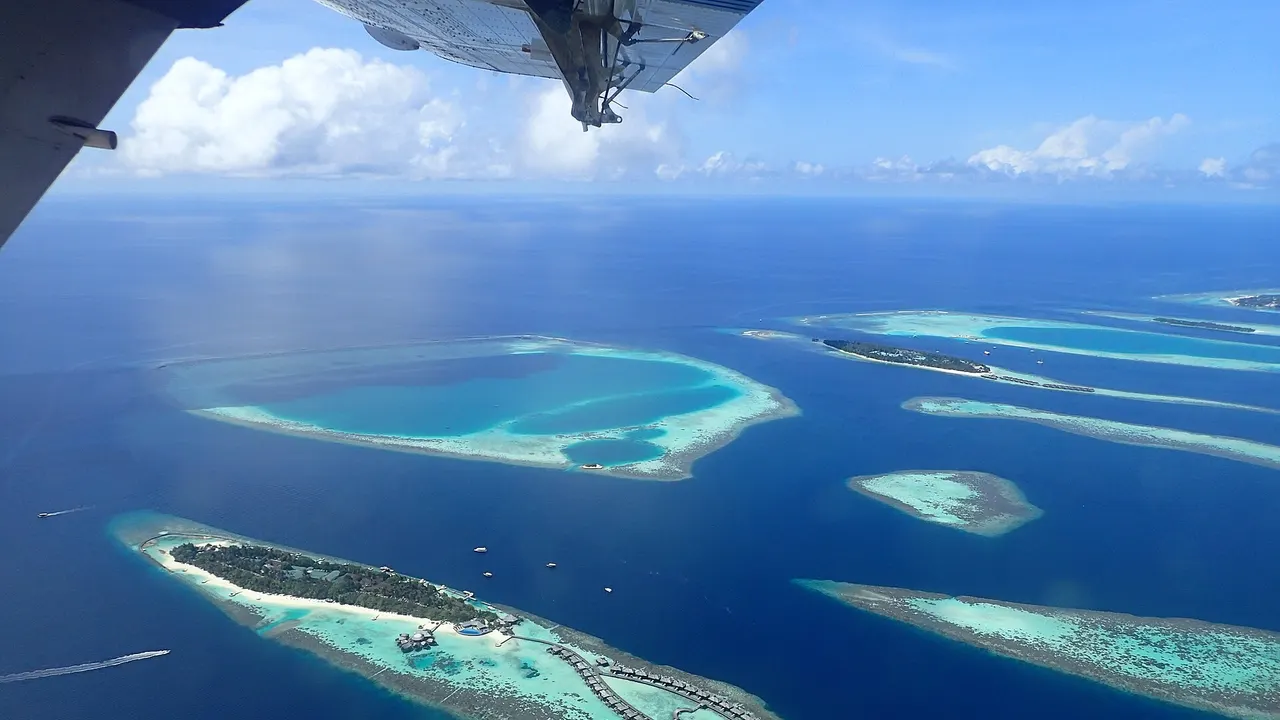
The Maldives means resort islands, overwater bungalows, and a turquoise ocean. Many travelers count on the resort’s Wi-Fi, but you will want a connection on the way too: the seaplane or speedboat transfer, navigation in Malé, calls home, and photos from paradise. Let’s look at how to get online.
Operators and coverage in the Maldives
The archipelago has two operators: Dhiraagu and Ooredoo Maldives. Both cover the capital Malé, Velana Airport, and most inhabited and resort islands. Between atolls, on the open ocean, and on some remote islands, the signal can drop.
Many resorts offer Wi-Fi in the bungalows and common areas, so mobile internet in the Maldives is more often needed on the road and as a backup when the hotel Wi-Fi is slow.
Roaming with your own operator
Roaming is the no-preparation option, but in the Maldives it is especially expensive: this is a remote destination, and roaming internet from Russian operators costs noticeably more. After you land, your phone catches up on updates and uploads photos to the cloud, and on the way to your resort island, by speedboat or seaplane, you may not even notice the charges. Before you fly, check your operator’s app for the cost of a day of internet and what happens after the package runs out. Since resorts usually have Wi-Fi, it makes sense to keep roaming only as a short backup for the transfer, and use a local network via eSIM as your main mobile internet.
Physical SIM or eSIM
Maldivian SIM cards are sold at the airport in Malé. But you often have to head to your resort island right after landing, by speedboat or seaplane, and stopping at an operator’s counter is not always convenient. Plus the standard downsides: registration, removing your own card, and missed bank SMS messages.
eSIM is an embedded SIM card that you activate with a QR code. For travelers from Russia, its advantages are:
- you buy it in advance, at home, with payment by Mir card or via SBP;
- the QR code arrives by email right after payment;
- internet works from the first minutes after landing, which is handy for the transfer;
- your Russian number stays in the phone, so bank SMS messages arrive;
- you do not need a passport or a trip to a mobile store.
If the technology is new to you, here is a simple explanation of what an eSIM is.
Comparison: roaming, local SIM, and eSIM
| Roaming | Local SIM (Dhiraagu, Ooredoo) | eSIM | |
|---|---|---|---|
| Where to get it | nothing needed | Malé airport | online before the trip |
| Internet after arrival | immediately, but expensive | after registration | immediately |
| Passport | not needed | needed | not needed |
| Your own number and bank SMS | yes | only with two SIM slots | yes |
| Payment from Russia | through your own operator’s bill | on the spot | by Mir card or via SBP |
| Best for | a short transfer | a long trip with a local number | a backup to resort Wi-Fi |
How to install an eSIM with a QR code
Install the profile at home over Wi-Fi.
iPhone: Settings → Cellular → Add eSIM → Use QR Code.
Android: Settings → Connections → SIM Manager → Add eSIM → scan the code from the email.
After you land, turn on the eSIM line for mobile data and enable data roaming for it. There will be no extra charges, the package is already paid for. Turn off data on your primary SIM. More details: how to avoid roaming charges abroad.
Which phones support eSIM
eSIM works on iPhone XS and newer, Google Pixel 3 and newer, flagship and many mid-range Samsung Galaxy models, and other modern smartphones; the phone must not be locked to an operator. Check your model here: does your phone support eSIM.
How much data to take to the Maldives
Since resorts usually have Wi-Fi, you do not need much mobile data:
- a stay on a resort island with Wi-Fi — 3 GB for a week is often enough as a backup;
- lots of video, stories, and calls without relying on hotel Wi-Fi — 5–10 GB.
At the resort, Wi-Fi covers almost everything, and mobile data is needed on the road and as a backup. What exactly your package goes toward:
- navigation and maps — about 5–15 MB per hour;
- messengers and text-based social media — 100–300 MB per day;
- camera translation — 1–5 MB per photo;
- photos and videos to the cloud — use up the package fastest;
- video calls and short videos — 300–600 MB per hour and more.
The main tip is to turn off automatic photo uploads to the cloud over mobile data: then your package lasts noticeably longer.
What to do if you run out of data
You do not need to buy a new eSIM: data can be topped up on the same card on your eSIM24 page or in your personal account, with payment by Mir card or via SBP.
Frequently asked questions
Does eSIM work on a resort island?
Most resort islands have coverage from local operators, and eSIM works on their networks. But on remote islands and between atolls, the signal can drop, so it is best to check your resort’s coverage in advance.
Do I need mobile internet if the hotel has Wi-Fi?
It is handy as a backup: hotel Wi-Fi can be slow, and on the road (on a speedboat, in Malé, on an excursion) your own connection saves the day.
Can I pay for an eSIM with a Mir card?
Yes, in eSIM24, payment works by Mir card or via SBP.
Do I need a Maldivian phone number?
Usually, tourists do not: eSIM gives you internet, calls go through messengers, and bank SMS messages arrive on your Russian number.
Bottom line
For a trip to the Maldives, eSIM is a convenient backup to hotel Wi-Fi: set it up at home, pay with a Mir card, and you are online as soon as your transfer starts. A local SIM and roaming are usually more than you need here.
Plans and prices are on the eSIM for the Maldives page.